Forging the Path Forward: How Texas Women Attorneys Are Crafting Their Own Mentorship Networks From the Ground Up
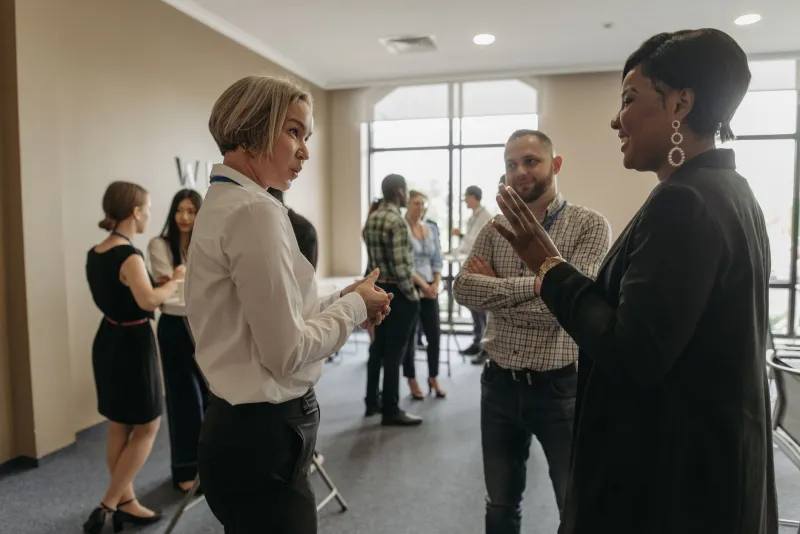
For decades, the conventional wisdom inside Texas law firms held that mentorship was something bestowed — a senior partner tapping a promising associate on the shoulder, offering guidance, introductions, and a quiet word of advocacy in the right rooms. For many women attorneys, that tap never came. The rooms remained closed. And the shoulders that received that gentle endorsement belonged, with striking regularity, to someone who looked nothing like them.
The numbers bear this out. Despite women comprising roughly half of law school graduates nationally, female representation in equity partnership at major Texas firms remains stubbornly low, hovering in the mid-to-upper twenties as a percentage in most market surveys. Mentorship scarcity is widely cited as a contributing factor — not the only one, but a significant structural piece of a puzzle that has frustrated women attorneys across the state for generations.
The response emerging from this frustration, however, is less a lament than a blueprint.
The Structural Problem With Organic Mentorship
Traditional mentorship in law has long operated on an informal, relationship-driven model. Senior attorneys mentor those with whom they feel an instinctive connection — a phenomenon organizational psychologists refer to as affinity bias. When leadership is predominantly male, those organic connections tend to flow toward male associates. Women are not excluded through deliberate hostility in most cases; they are simply not in the room where the informal conversations happen, the ones that precede formal assignments, client introductions, and partnership considerations.
This gap is compounded by a second structural problem: the scarcity of senior women themselves. A junior associate hoping to find a female mentor who has navigated partnership-track pressures while managing family obligations, bias in the courtroom, or compensation disparities may find very few candidates within her own firm. And those senior women who do exist are frequently stretched thin — mentoring multiple junior colleagues while managing demanding client portfolios and their own advancement pressures.
"There is an enormous amount of goodwill among senior women attorneys who genuinely want to give back," notes the perspective shared consistently in conversations across the Texas legal community. "The math simply does not work. There are not enough of us to go around through conventional one-on-one arrangements."
Peer Mentorship Circles: Strength in Lateral Connection
Recognizing this arithmetic problem, many Texas women attorneys have turned to a horizontal model rather than a vertical one. Peer mentorship circles — small groups of attorneys at comparable career stages who meet regularly to share challenges, exchange referrals, and hold one another accountable — have proliferated in cities including Houston, Dallas, Austin, and San Antonio over the past several years.
These circles operate with varying degrees of formality. Some function as structured monthly gatherings with rotating discussion topics, guest speakers, or skill-building exercises. Others are deliberately informal — a standing dinner where candid conversation is the only agenda item. What they share is intentionality. Membership is curated, participation is consistent, and the relationships formed carry professional weight.
The value proposition of the peer circle is distinct from traditional mentorship. Rather than wisdom flowing downward from a single experienced source, it circulates laterally. A litigator navigating a hostile opposing counsel dynamic offers insight to a transactional attorney facing a difficult client negotiation. A solo practitioner who has mastered business development shares her approach with a BigLaw associate preparing to make a lateral move. Expertise is distributed rather than concentrated, and the reciprocity embedded in the model tends to sustain engagement over time.
Reverse Mentoring: Redefining Who Teaches Whom
A second strategy gaining traction among Texas women attorneys inverts the traditional mentorship hierarchy entirely. Reverse mentoring pairs junior attorneys with senior ones — but positions the junior attorney as the knowledge source, typically around technology, social media strategy, evolving workplace culture, or the perspectives of younger client demographics.
For women attorneys, this arrangement carries particular potential. It creates a legitimate, structured reason for a junior woman to spend time with senior leadership, building visibility and rapport outside the conventional assignment pipeline. Senior attorneys who participate in reverse mentoring arrangements frequently report that the relationships deepen into genuine two-way exchanges — the junior attorney gains access to institutional knowledge and advocacy, while the senior attorney gains insight that makes them more effective leaders.
The key to making reverse mentoring work, practitioners emphasize, is framing. The arrangement must be positioned as a genuine exchange of value, not a charitable exercise. Senior attorneys are more likely to commit sustained attention when they understand concretely what they stand to learn.
Informal Leadership Councils: Building the Infrastructure That Firms Have Not
Perhaps the most structurally ambitious response to the mentorship gap is the emergence of informal women's leadership councils — bodies that exist outside official firm structures and operate with a mission explicitly focused on advancing female attorneys within a practice area, geographic market, or professional community.
These councils vary widely in their composition and scope. Some are organized within a single firm, operating alongside — or in the absence of — official diversity and inclusion initiatives. Others are cross-firm or cross-sector, convening women attorneys from private practice, in-house roles, and government positions around shared professional interests. The Texas Women Lawyers community itself exemplifies this cross-institutional model at the statewide level.
What distinguishes these councils from traditional bar association committees or affinity groups is their explicit focus on action over association. Effective councils identify specific barriers — whether in hiring, compensation, client origination credit, or leadership succession — and develop targeted responses. They track outcomes. They hold themselves and the institutions they inhabit accountable for measurable progress.
Cultivating the Next Generation: Paying It Forward Strategically
Building these structures is not only about the attorneys who create them. The longer arc of this movement is about ensuring that the women entering Texas law practice today inherit a professional environment meaningfully different from the one their predecessors navigated.
This requires intentionality at the mentoring relationship level as well. Women attorneys who have benefited from peer circles or informal councils increasingly describe a professional obligation to extend those networks actively — to identify promising junior women, make specific introductions, advocate explicitly in rooms where junior attorneys are not present, and share not just encouragement but the granular, tactical knowledge that accelerates careers.
That tactical knowledge — how to position oneself for a particular practice group, how to negotiate origination credit arrangements, how to manage a difficult partner dynamic — is precisely the kind of information that flows freely through informal networks and rarely appears in official onboarding materials. Making it accessible to women who lack the network connections to acquire it organically is among the most consequential contributions senior women attorneys can make.
A Movement Built on Necessity, Sustained by Commitment
The mentorship structures Texas women attorneys are building were not born from inspiration alone. They were born from necessity — from the recognition that waiting for institutions to solve a problem those institutions have not yet prioritized is itself a career strategy with a poor track record.
What is remarkable about this moment is the degree to which that necessity has been transformed into genuine architecture: replicable models, intentional relationships, and communities of practice that are beginning to accumulate the kind of institutional memory and collective influence that changes professional cultures over time.
The invitation, it turns out, was never coming. So Texas women attorneys wrote their own.